

Have you ever come across the phrase “hone in” while reading an article, watching a YouTube video, or chatting online and wondered what it actually means?
You’re definitely not alone. Many people pause when they see this expression because it sounds similar to another phrase, “home in on.”
That confusion makes it one of the most searched English expressions online.
Quick Answer:
Hone in means to focus more closely on something or improve your attention toward a specific goal or detail.
It’s commonly used in both casual and professional English when talking about concentrating on a particular topic, skill, or problem.
🧠 What Does Hone In Mean in Text?
The phrase “hone in” means to focus carefully on something or pay closer attention to a specific detail or goal.
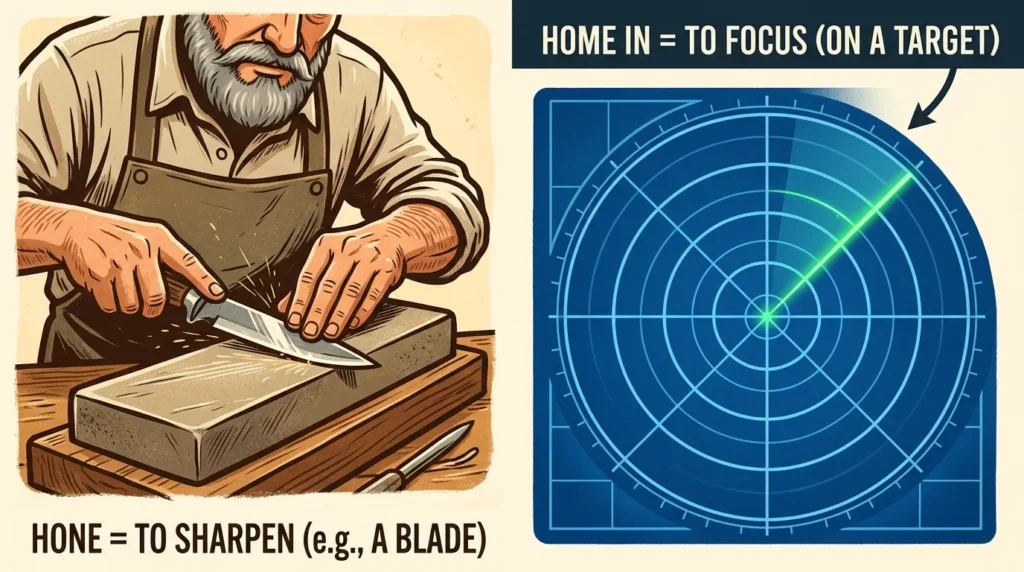
The word hone originally means to sharpen, like sharpening a knife. Over time, people began using hone in to describe sharpening their focus or directing their attention toward something important.
Example
A: We have too many ideas for the project.
B: Let’s hone in on the best one first.
Here, hone in simply means focus on the most important idea.
In short: Hone in = Focus closely = Pay careful attention to something.
📱 Where Is Hone In Commonly Used?

You’ll see hone in in many everyday situations, including:
- 💬 Text messages with friends
- 📱 Social media posts
- 🎥 YouTube videos
- 💼 Workplace conversations
- 📚 School assignments
- 🎮 Gaming discussions
- 🎙️ Podcasts and interviews
Tone
- ✅ Casual conversations
- ✅ Professional meetings
- ✅ Educational writing
- ✅ Business presentations
Unlike internet slang, hone in works well in both informal and formal communication.
💬 Examples of Hone In in Conversation
Example 1
A: there’s too much information 😅
B: let’s hone in on the important parts.
Example 2
A: what should we improve first?
B: we should hone in on customer feedback.
Example 3
A: your aim is getting better 👏
B: i’ve been trying to hone in on my accuracy.
Example 4
A: what’s our biggest issue?
B: let’s hone in on the budget first.
Example 5
A: i keep making mistakes 😭
B: just hone in on one step at a time.
Example 6
A: which chapter should i study?
B: hone in on chapter 5. it’s most important.
Example 7
A: how can i grow my business?
B: hone in on your target audience.
🕓 When to Use and When Not to Use Hone In
✅ When to Use
- Talking about focusing on a goal
- Discussing work projects
- Giving study advice
- Planning strategies
- Improving a skill
- Solving a problem
❌ When Not to Use
- When you simply mean “look at.”
- When discussing physical movement toward a location.
- When a more direct phrase like “choose” or “select” is clearer.
- If the audience may not understand the expression.
| Context | Example Phrase | Why It Works |
|---|---|---|
| Friend Chat | Let’s hone in on the funniest clips 😂 | Casual and natural |
| Work Chat | Let’s hone in on this issue first. | Professional and clear |
| Please hone in on the key findings before tomorrow’s meeting. | Formal yet natural |
🔄 Similar Words and Alternatives
| Phrase | Meaning | When to Use |
|---|---|---|
| Focus on | Concentrate on something | Everyday conversations |
| Zero in on | Direct attention to something specific | Informal and business settings |
| Concentrate on | Give full attention | School and work |
| Pay attention to | Notice carefully | General English |
| Home in on | Move toward or focus on a target | Formal writing and navigation |
| Target | Aim at something specific | Business and marketing |
Common Mistakes About “Hone In”
Many English learners wonder whether hone in or home in on is correct.
Here’s the difference:
- Home in on originally referred to moving accurately toward a target, like a missile or animal finding its destination.
- Hone in became popular because people connected hone (meaning sharpen) with sharpening focus.
Today, hone in is widely accepted in modern English, especially in American English, although some style guides still prefer home in on in formal writing.
Is Hone In Formal or Casual?
One reason this phrase is so popular is its flexibility.
Casual
- Let’s hone in on the best restaurant.
- We need to hone in on today’s goals.
Professional
- The report helps us hone in on customer behavior.
- We should hone in on the most profitable markets.
Academic
Teachers and professors also use this phrase when asking students to narrow their focus during research or writing.
Why People Use Hone In
People use hone in because it’s shorter and more natural than saying:
- Focus carefully on
- Pay closer attention to
- Narrow your attention toward
- Concentrate specifically on
It sounds conversational while still being appropriate in professional settings.
FAQs About Hone In
What does hone in mean?
It means to focus closely on a specific subject, goal, or problem.
Is hone in grammatically correct?
Yes. It is widely accepted in modern English, although some traditional style guides prefer home in on.
Is hone in slang?
No. It is a standard English expression, not internet slang.
Can I use hone in at work?
Yes. It’s common in business meetings, emails, and presentations.
What’s the difference between hone in and focus on?
Both mean to concentrate on something, but hone in often suggests narrowing your attention more precisely.
Is hone in formal?
Yes. It can be used in both formal and informal situations.
Can students use hone in in essays?
Yes, although some teachers may recommend focus on or home in on depending on the style guide.
Is hone in common on social media?
Yes. Many creators, influencers, and professionals use it when discussing goals, tips, or strategies.
Final Thoughts
The phrase hone in simply means to focus closely on something important. Whether you’re studying for an exam, working on a project, improving a skill, or chatting with friends, it’s a useful expression that helps describe narrowing your attention to what matters most.
While it’s sometimes confused with home in on, modern English speakers frequently use hone in, and most readers understand exactly what it means. Learning this phrase will make both your writing and conversations sound more natural and confident.

Nova HN is a creative writer at snamez.com, crafting unique and engaging content focused on names, nicknames, and innovative ideas.