
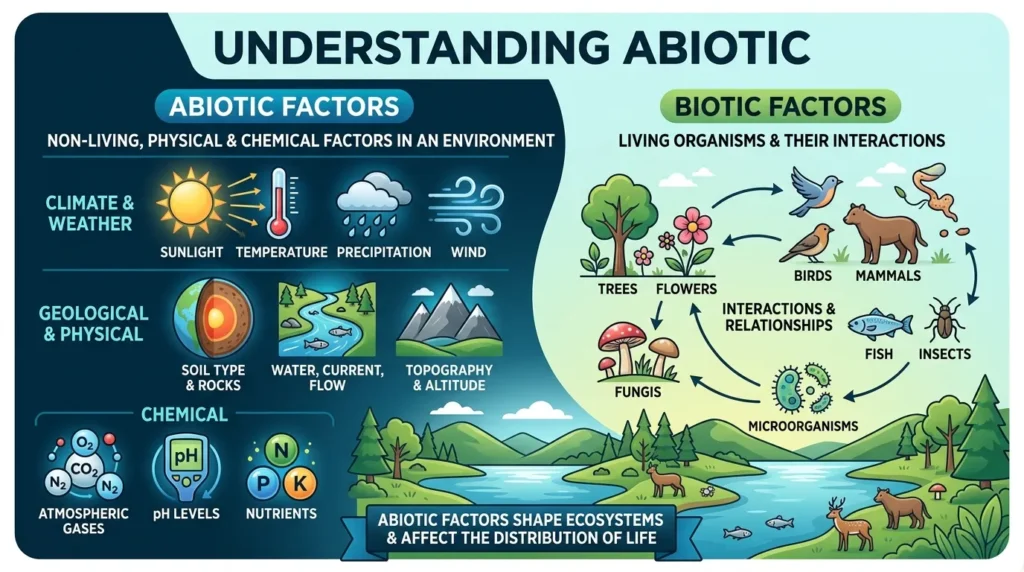
Have you ever heard the word abiotic in science class or while reading about nature?
Many people search “what does abiotic mean” because they want a simple explanation without difficult scientific words.
Understanding this term helps you learn how ecosystems work and why living things depend on their surroundings.
In this guide, you’ll discover the meaning of abiotic, see real-life examples, learn the difference between biotic and abiotic factors, and understand why abiotic elements are important for plants, animals, and humans.
Whether you’re a student, teacher, or simply curious about nature, this article explains everything in easy English.
🌍 What Does Abiotic Mean?
The word abiotic means non-living. It describes things in nature that are not alive but still affect living organisms.
The word comes from two parts:
- A = without
- Biotic = life
So, abiotic literally means “without life.”
Examples include:
- Sunlight
- Water
- Air
- Rocks
- Soil
- Temperature
- Wind
- Rain
Although these things are not alive, they help shape every ecosystem.
☀️ Common Examples of Abiotic Factors
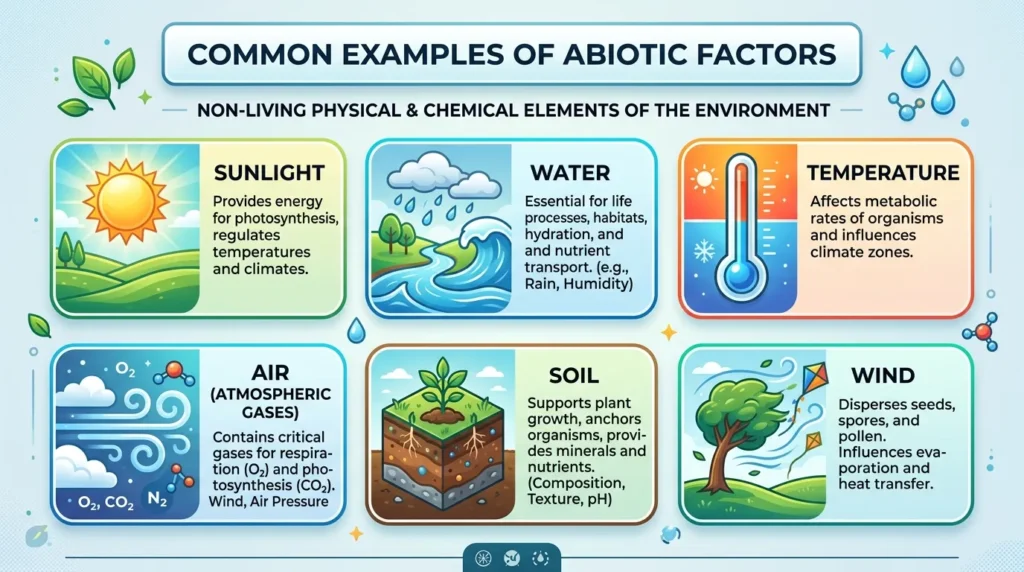
Abiotic factors are found everywhere in nature. Here are some of the most common examples.
Sunlight
Provides energy for plants through photosynthesis.
Water
All living organisms need water to survive.
Air
Plants use carbon dioxide, while animals breathe oxygen.
Soil
Supplies nutrients and supports plant roots.
Temperature
Controls where plants and animals can live.
Wind
Helps spread seeds and pollen.
Rainfall
Provides fresh water for ecosystems.
Rocks
Create habitats and influence soil formation.
Minerals
Essential nutrients for plant growth.
Climate
Long-term weather conditions affect entire ecosystems.
🌱 What Are Biotic Factors?
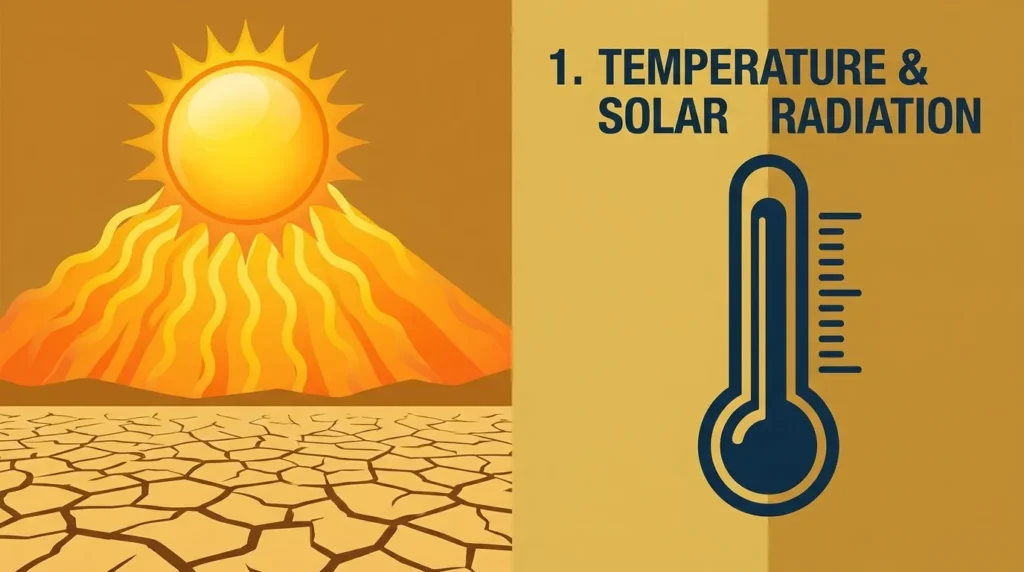
To understand abiotic, it helps to know the opposite term.
Biotic factors are living or once-living things.
Examples include:
- Plants
- Animals
- Humans
- Trees
- Fish
- Birds
- Insects
- Bacteria
- Fungi
- Algae
Biotic and abiotic factors work together to create healthy ecosystems.
⚖️ Abiotic vs. Biotic Factors
Here’s a simple comparison.
| Abiotic | Biotic |
|---|---|
| Non-living | Living or once living |
| Water | Trees |
| Air | Animals |
| Sunlight | Humans |
| Rocks | Birds |
| Soil | Bacteria |
Both are essential for life on Earth.
🌿 Why Are Abiotic Factors Important?
Without abiotic factors, life could not exist.
They help by:
- Providing water for drinking.
- Giving plants sunlight for food production.
- Supplying oxygen and carbon dioxide.
- Regulating temperature.
- Supporting habitats.
- Helping seeds grow.
- Influencing animal behavior.
- Maintaining ecosystems.
- Supporting agriculture.
- Balancing nature.
Every living thing depends on abiotic conditions.
🌎 Abiotic Factors in Different Ecosystems
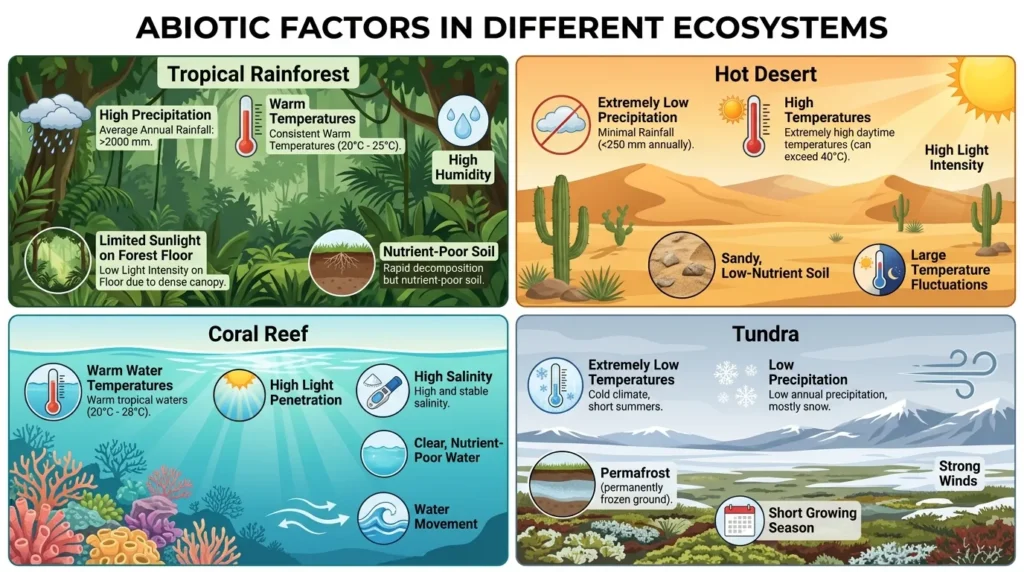
Different ecosystems have different abiotic conditions.
Desert
- Hot temperatures
- Very little rainfall
- Sandy soil
Forest
- Rich soil
- Plenty of rainfall
- Moderate temperatures
Ocean
- Salt water
- Ocean currents
- Sunlight near the surface
Arctic
- Ice
- Snow
- Extremely cold temperatures
Each ecosystem supports different forms of life.
🌾 How Abiotic Factors Affect Plants
Plants rely heavily on abiotic conditions.
Important factors include:
- Sunlight for photosynthesis.
- Water for growth.
- Soil nutrients.
- Proper temperature.
- Fresh air.
- Rainfall.
- Minerals.
- Space to grow.
- Climate.
- Soil moisture.
Changes in these factors can improve or reduce plant growth.
🐘 How Abiotic Factors Affect Animals
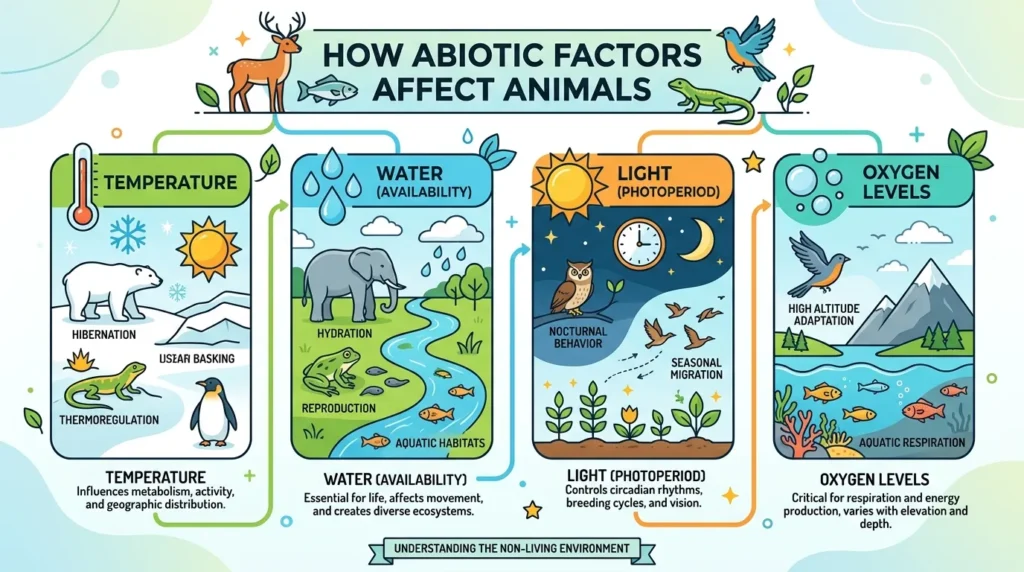
Animals also depend on abiotic elements.
They need:
- Water for survival.
- Air for breathing.
- Suitable temperatures.
- Shelter created by rocks or landforms.
- Food that grows because of sunlight.
- Rivers and lakes.
- Healthy habitats.
- Seasonal weather.
- Safe environments.
- Balanced ecosystems.
Without these conditions, many animals would struggle to survive.
📚 Abiotic in Science
Students often learn about abiotic factors in biology and environmental science.
Scientists study abiotic factors to:
- Understand ecosystems.
- Predict climate change effects.
- Improve farming.
- Protect wildlife.
- Restore damaged habitats.
- Study oceans.
- Manage forests.
- Improve conservation.
- Monitor pollution.
- Understand biodiversity.
Abiotic factors are one of the basic concepts in ecology.
❓ Frequently Asked Questions
Is water abiotic?
Yes. Water is non-living, so it is an abiotic factor.
Is soil abiotic?
Yes. Soil itself is considered abiotic, although it contains many living organisms.
Is sunlight abiotic?
Yes. Sunlight provides energy but is not alive.
Is air abiotic?
Yes. Air is an important abiotic factor.
Are rocks abiotic?
Yes. Rocks are non-living natural materials.
Is a tree abiotic?
No. A tree is living, so it is biotic.
Is a mushroom abiotic?
No. Mushrooms are living fungi.
Can abiotic factors change?
Yes. Weather, climate, pollution, and natural disasters can change abiotic conditions.
🌟 Fun Facts About Abiotic Factors
- The Sun is the main source of energy for most ecosystems.
- Some plants can survive with very little water.
- Deep ocean ecosystems have almost no sunlight.
- Temperature affects where many animals migrate.
- Soil can take hundreds of years to form.
- Wind helps many plants reproduce.
- Rainfall shapes forests and deserts.
- Climate influences biodiversity.
- Water covers about 71% of Earth’s surface.
- Every ecosystem depends on a balance between biotic and abiotic factors.
🎯 Conclusion
Now you know the answer to “what does abiotic mean?” Abiotic simply refers to the non-living parts of the environment, such as sunlight, water, air, soil, rocks, and temperature. Even though these things are not alive, they play a vital role in supporting every plant, animal, and ecosystem on Earth.
Understanding abiotic factors makes it easier to learn biology, ecology, and environmental science. The next time you explore nature, try identifying the abiotic and biotic factors around you you’ll see how they work together to support life.

Nova HN is a creative writer at snamez.com, crafting unique and engaging content focused on names, nicknames, and innovative ideas.