
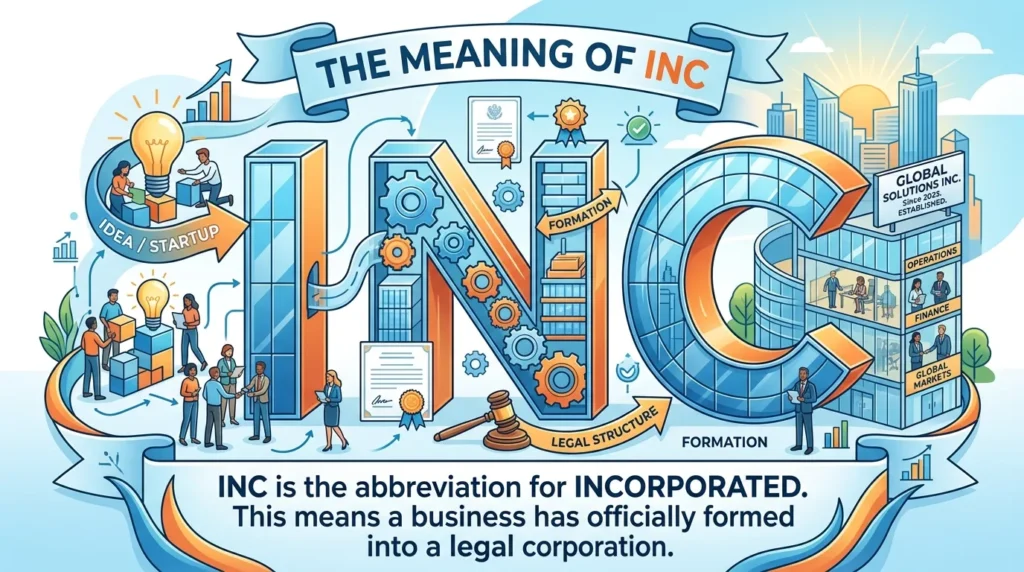
Ever looked at a company name and thought, Wait… what’s that little ‘Inc.’ doing there?
You’re not alone! If you’ve been scratching your head wondering what does inc mean, you’re in the right place.
It’s one of those business terms we see everywhere but rarely stop to question.
The funny part? Many people think it’s just a fancy way to make a company sound important.
In this guide, we’ll break down what does inc mean in simple English, without the boring legal jargon.
By the end, you’ll know exactly why companies proudly add “Inc.” to their names!
📌 What Does Inc Mean?
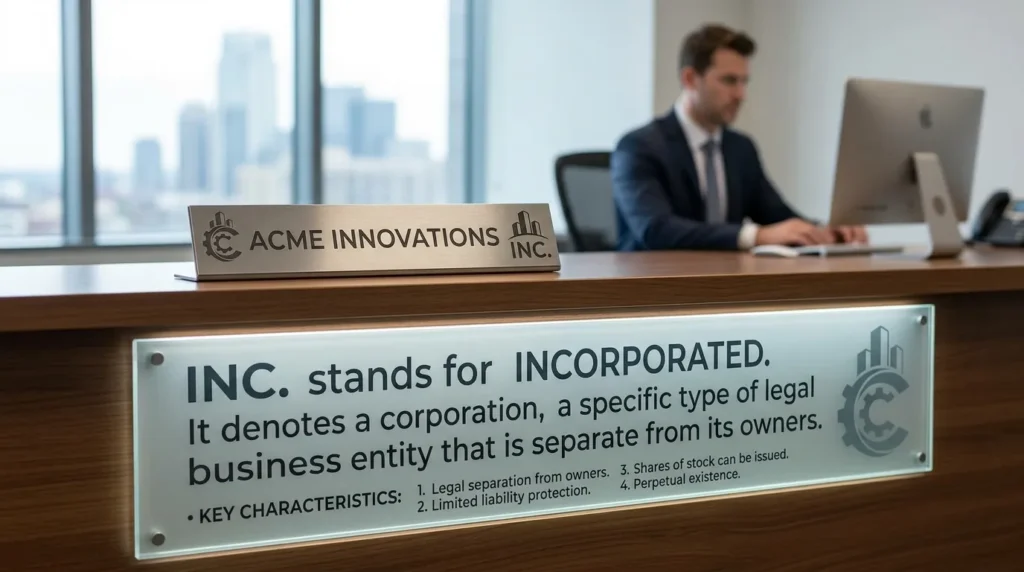
The abbreviation Inc. stands for Incorporated.
When a company includes “Inc.” after its name, it means the business has been legally incorporated according to the laws of a state or country.
For example:
- Apple Inc.
- Intel Inc.
- Nike Inc.
These companies have completed the legal incorporation process and operate as corporations.
In simple terms, incorporation creates a separate legal entity that exists independently from its owners.
🏢 What Is an Incorporated Company?
An incorporated company is a business that has been legally formed as a corporation.
Once incorporated, the company becomes its own legal entity. This means it can:
- Own property
- Sign contracts
- Borrow money
- Sue others
- Be sued
- Continue operating even if ownership changes
The corporation is legally separate from the individuals who own it.
⚖️ Why Do Companies Use Inc.?

Many businesses choose incorporation because it provides important legal and financial advantages.
Common reasons include:
- Protecting personal assets
- Increasing business credibility
- Attracting investors
- Raising capital through stock sales
- Ensuring business continuity
These benefits make incorporation attractive for growing companies.
🛡️ Limited Liability Protection
One of the biggest advantages of incorporation is limited liability.
Limited liability means that the owners (shareholders) are generally not personally responsible for the company’s debts and obligations.
For example:
If a corporation owes $500,000 and cannot pay it, creditors typically cannot take the shareholders’ personal assets such as:
- Personal savings
- Cars
- Houses
This protection is a major reason many entrepreneurs choose incorporation.
💰 How Does an Inc. Company Make Money?
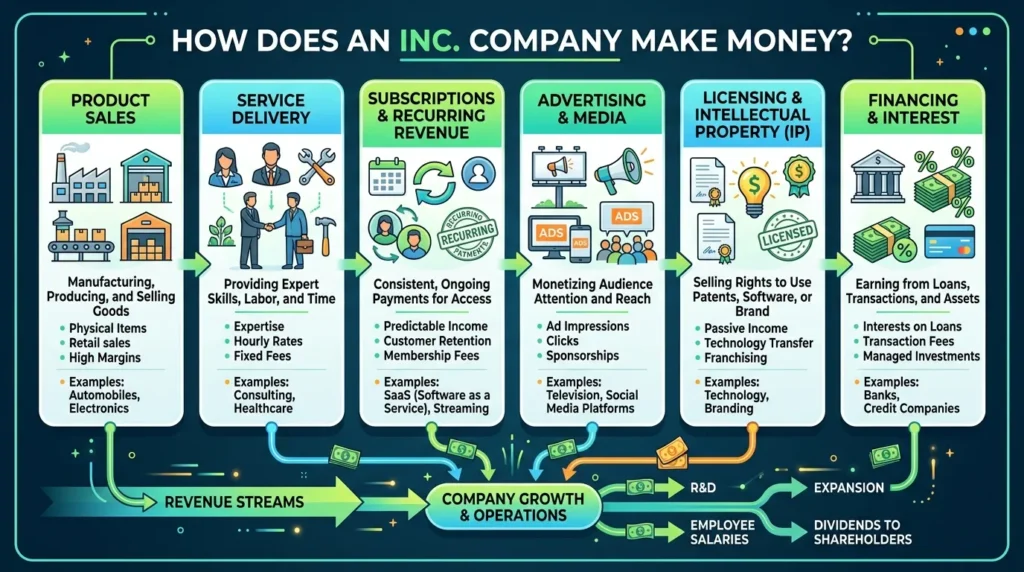
An incorporated company earns money just like any other business.
Revenue may come from:
- Selling products
- Providing services
- Licensing technology
- Advertising
- Investments
After paying expenses and taxes, profits can be:
- Reinvested into the business
- Distributed to shareholders
- Used for expansion
📈 Can an Inc. Sell Shares?
Yes.
Most corporations can issue shares of stock.
Shares represent ownership in the company.
Benefits of issuing shares include:
- Raising capital
- Funding growth
- Attracting investors
- Expanding operations
This is one reason large businesses often choose incorporation over other business structures.
🔍 Difference Between Inc. and LLC
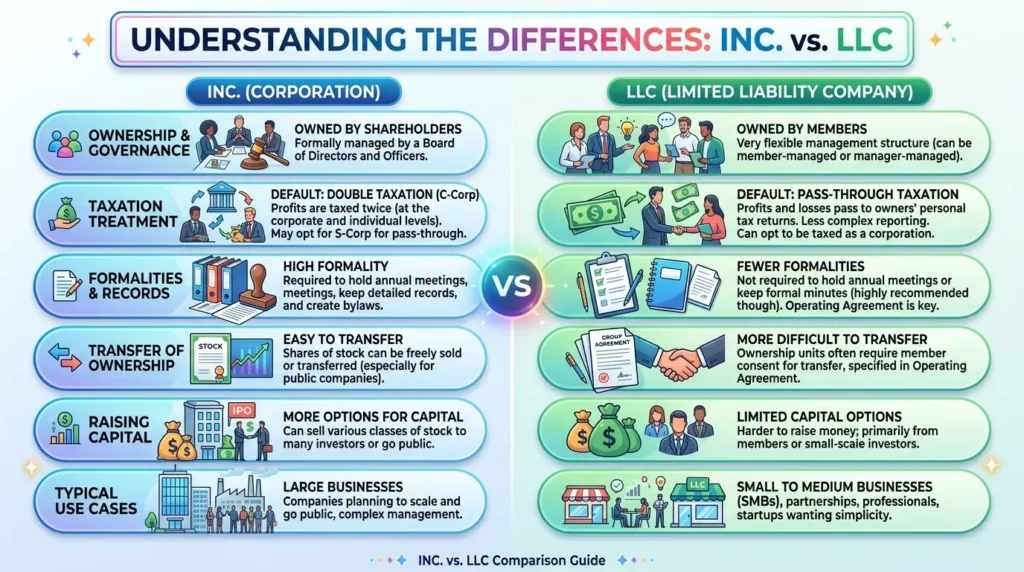
Many people confuse Inc. with LLC.
Inc. (Corporation)
- Separate legal entity
- Can issue stock
- More formal management structure
- Often preferred by investors
LLC (Limited Liability Company)
- Flexible management
- Simpler administration
- Limited liability protection
- Popular among small businesses
Both structures offer liability protection, but they operate differently.
🌎 Is Inc. Used Worldwide?
The term “Inc.” is most commonly used in the United States.
Other countries may use different abbreviations.
Examples include:
- Ltd. (Limited)
- PLC (Public Limited Company)
- GmbH (Germany)
- Pvt Ltd (Private Limited)
Although the names differ, they often serve similar purposes.
📝 How Does a Business Become Incorporated?

The incorporation process generally includes:
1. Choose a Business Name
Select a unique company name that complies with local regulations.
2. File Formation Documents
Submit incorporation paperwork to the relevant government authority.
3. Create Corporate Bylaws
Establish rules governing company operations.
4. Appoint Directors
Choose individuals responsible for overseeing the corporation.
5. Issue Shares
Allocate ownership through stock shares.
6. Obtain Licenses
Secure required permits and licenses.
Once approved, the company can legally use “Inc.” in its name.
🚀 Benefits of Incorporation
There are many advantages to becoming incorporated.
Asset Protection
Owners gain limited liability protection.
Increased Credibility
Customers and investors often view incorporated businesses as more professional.
Easier Funding
Corporations can attract investors through stock issuance.
Business Continuity
The company continues operating even if ownership changes.
Tax Planning Opportunities
Some corporations benefit from certain tax strategies.
⚠️ Disadvantages of Incorporation
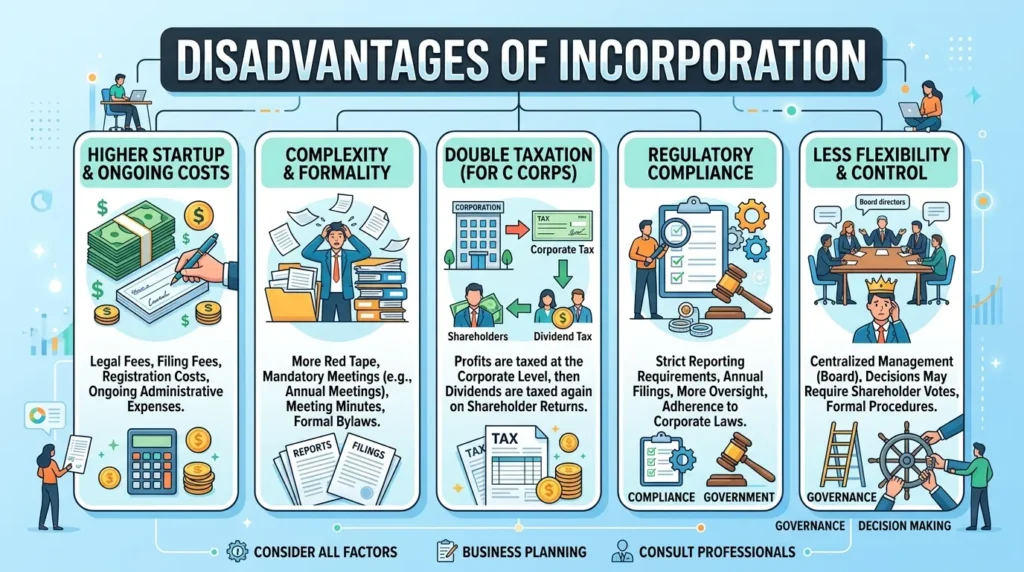
Incorporation is not perfect.
Potential drawbacks include:
More Paperwork
Corporations must maintain records and file reports.
Higher Costs
Formation and compliance expenses may be higher.
Regulatory Requirements
Corporations must follow various legal obligations.
Possible Double Taxation
Some corporations may face taxation at both the corporate and shareholder levels.
🏆 Famous Companies With Inc. in Their Names
Many globally recognized businesses use Inc.
Examples include:
- Apple Inc.
- Intel Inc.
- Adobe Inc.
- Netflix Inc.
- Nvidia Inc.
These corporations demonstrate how common incorporation is among successful businesses.
🤔 Is Every Company With Inc. Publicly Traded?
No.
A common misconception is that all incorporated companies are publicly traded.
In reality:
- Some Inc. companies are private.
- Some Inc. companies are public.
The term simply indicates incorporation, not whether shares are available to the public.
📚 Inc. vs Corporation
People often ask whether Inc. and Corporation are the same.
Generally, yes.
“Inc.” is simply an abbreviation indicating that the business is incorporated and operates as a corporation.
Examples:
- ABC Corporation
- ABC Inc.
Both indicate corporate status.
🎯 When Should a Business Incorporate?
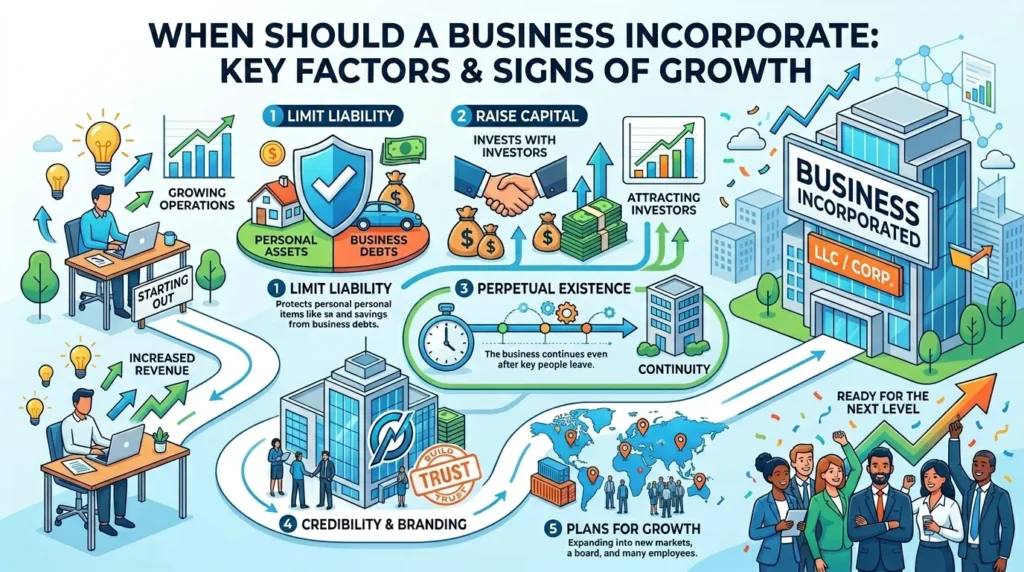
Businesses may consider incorporation when they:
- Have growing revenue
- Need investor funding
- Face liability risks
- Plan long-term expansion
- Want stronger legal protection
The right choice depends on the business’s goals and circumstances.
Frequently Asked Questions
What does Inc stand for?
Inc stands for Incorporated.
Is Inc the same as LLC?
No. Inc refers to a corporation, while LLC refers to a Limited Liability Company.
Does Inc mean the company is public?
No. Incorporated companies can be public or private.
Why do companies add Inc to their names?
It indicates that the business has legally incorporated and operates as a corporation.
Can a small business become Inc.?
Yes. Small businesses can choose to incorporate if it suits their needs.
Conclusion
So, what does Inc mean? The term Inc. stands for Incorporated, indicating that a business has been legally formed as a corporation. Incorporation creates a separate legal entity, providing benefits such as limited liability protection, increased credibility, easier fundraising opportunities, and long-term business continuity.
Whether you’re starting a business, investing in companies, or simply curious about corporate terminology, understanding the meaning of Inc. can help you better navigate the business world. From small startups to global giants like Apple Inc. and Intel Inc., incorporation remains one of the most widely used and important business structures today.

Robert Frost is a creative and reflective writer at snamez.com, crafting unique names, nicknames, and inspiring ideas.