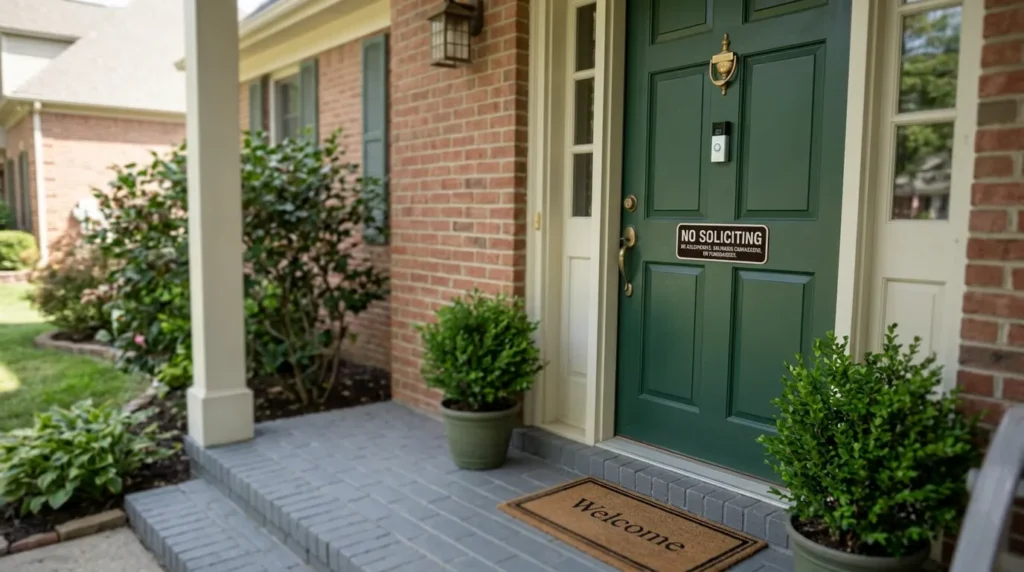
Have you ever walked up to a house or business and noticed a sign that says “No Soliciting”?
Many people wonder what this sign actually means, who it applies to, and whether it is legally enforceable.
It is a common phrase, but it often causes confusion because different people use the word “soliciting” in different ways.
In this guide, you’ll learn exactly what “no soliciting” means, where these signs are commonly used, who must follow them, and what happens if someone ignores them.
We’ll also cover common misconceptions, examples from everyday life, legal considerations, and frequently asked questions.
By the end of this article, you’ll have a clear understanding of the phrase and know how to respect these signs wherever you see them.
📌 What Does “No Soliciting” Mean?
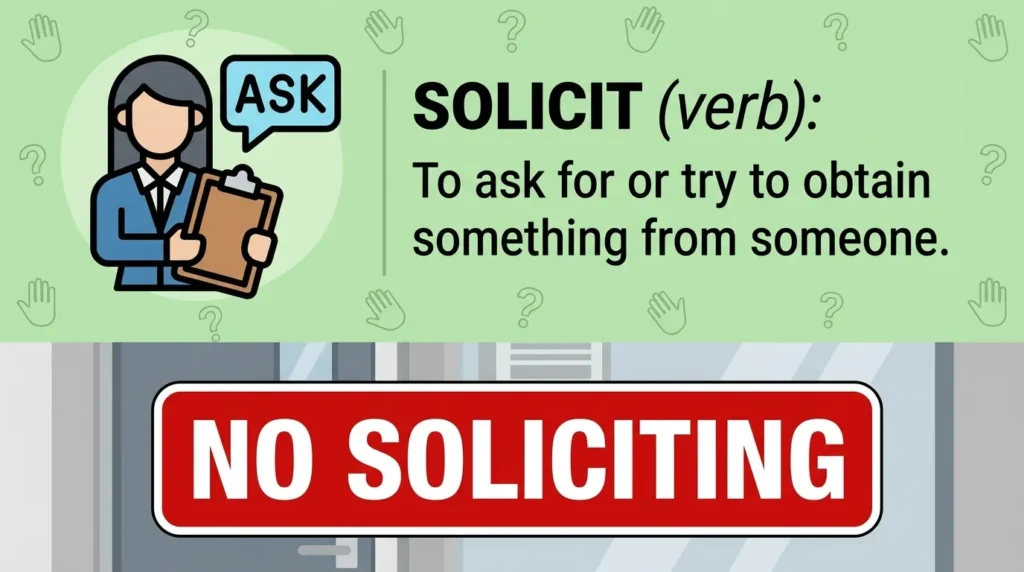
The phrase “No Soliciting” means that people are not welcome to approach the property to sell products, promote services, request donations, or ask for business.
In simple words, the property owner does not want uninvited visitors trying to sell something or ask for money.
Examples include:
- Door-to-door salespeople
- Home improvement contractors
- Magazine subscription sellers
- Charity fundraisers
- Political campaign workers (depending on local laws)
- Religious groups in some situations
The goal is to protect the privacy of the people inside.
🚪 What Is Soliciting?
Soliciting means asking someone for something, especially:
- Selling products
- Offering services
- Requesting donations
- Looking for customers
- Advertising a business
- Seeking signatures or support
For example, if someone knocks on your door to sell solar panels, they are soliciting.
🏡 Where Are No Soliciting Signs Commonly Found?
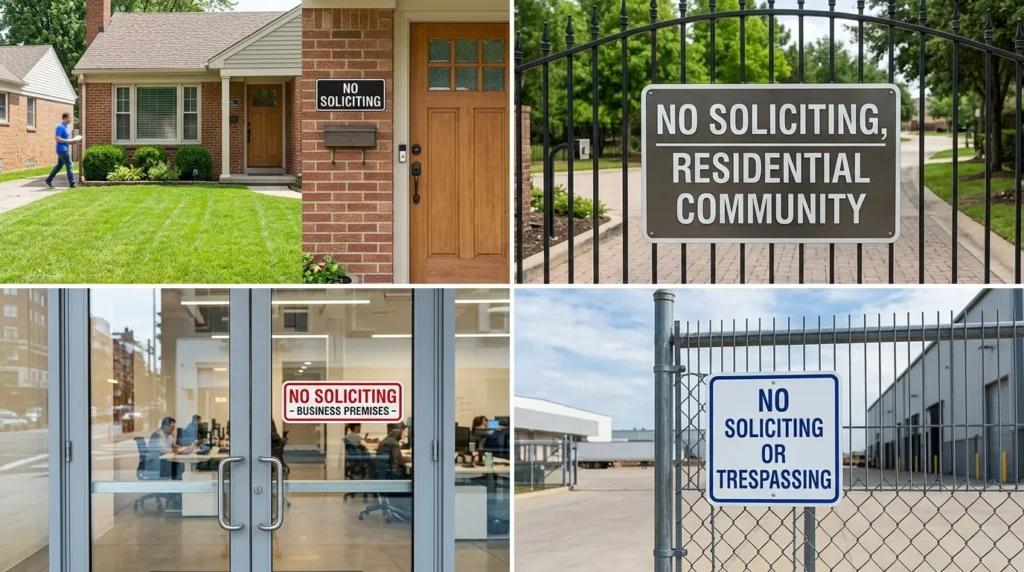
You may see these signs in many places, including:
Homes
Many homeowners want to avoid unwanted interruptions.
Apartment Buildings
Property managers often post signs to reduce disturbances.
Businesses
Companies may not want sales representatives entering without appointments.
Private Communities
Gated neighborhoods frequently prohibit door-to-door solicitation.
🚫 Who Must Respect a No Soliciting Sign?
Generally, these groups should respect the sign:
- Salespeople
- Marketing companies
- Contractors
- Charity fundraisers
- Product promoters
- Service providers
- Magazine sellers
- Security system sales representatives
- Home improvement companies
- Door-to-door advertisers
Ignoring the sign may violate community rules or local ordinances.
⚖️ Is a No Soliciting Sign Legally Enforceable?
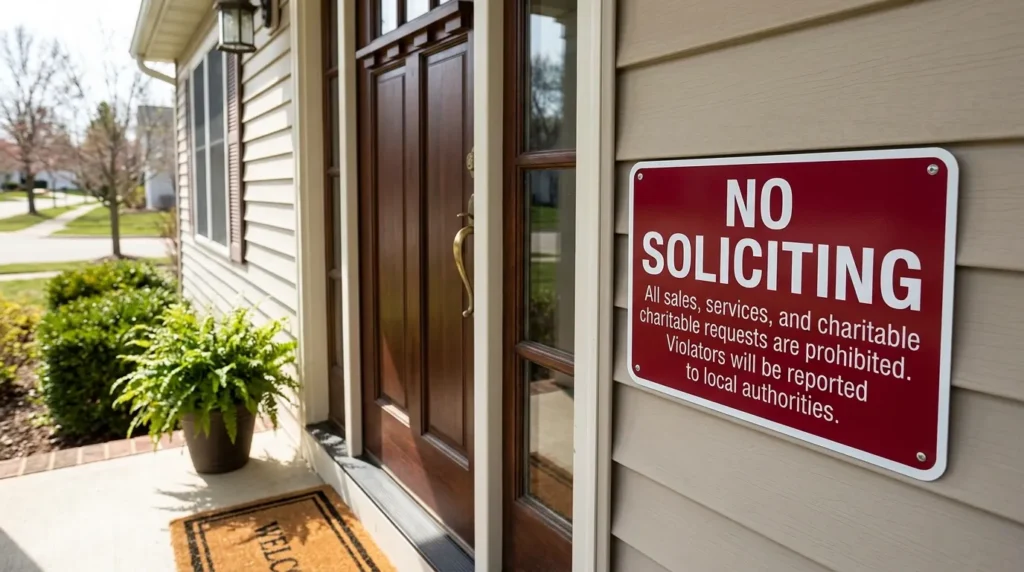
The answer depends on where you live.
Many cities and towns have local ordinances that regulate door-to-door solicitation. In some areas, ignoring a clearly posted “No Soliciting” sign may result in warnings or fines.
However, the exact rules vary by state, province, or country. Some types of speech, such as political or religious outreach, may receive additional legal protections.
Always check your local laws for specific requirements.
🤔 No Soliciting vs. No Trespassing
People often confuse these two signs.
No Soliciting
- Stops unwanted sales and promotions.
- Visitors may still enter for other legitimate reasons.
No Trespassing
- Prohibits unauthorized entry onto private property.
- Covers many types of visitors, not just salespeople.
A “No Trespassing” sign is generally broader than a “No Soliciting” sign.
🛍️ Common Examples of Soliciting
Examples include:
- Selling internet service
- Offering lawn care
- Selling insurance
- Promoting pest control
- Requesting charitable donations
- Selling home security systems
- Roofing estimates
- Window replacement offers
- Magazine subscriptions
- Cleaning services
These are all common forms of door-to-door solicitation.
😊 Why Do People Put Up No Soliciting Signs?
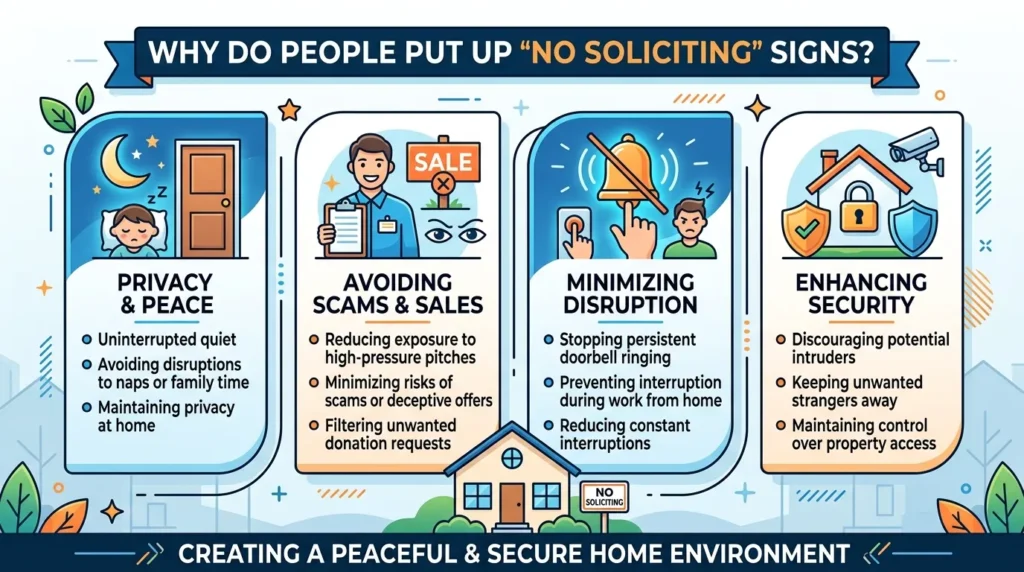
There are many reasons:
- Protect privacy
- Reduce interruptions
- Prevent aggressive sales tactics
- Avoid scams
- Stop repeated visits
- Keep pets calm
- Prevent sleeping children from being disturbed
- Work from home without interruptions
- Improve neighborhood security
- Enjoy peace and quiet
For many homeowners, the sign simply communicates a personal preference.
❌ What Happens If Someone Ignores the Sign?
Ignoring a “No Soliciting” sign can have different consequences:
- The homeowner may ask the person to leave.
- The visitor may be reported to their employer.
- Some cities may issue fines.
- Neighborhood associations may file complaints.
- Businesses may lose potential customers because they ignored the request.
Respecting the sign is always the best approach.
💬 Common Misunderstandings
Many people misunderstand the phrase.
Myth 1
“No Soliciting” means nobody can knock.
Reality: Delivery drivers, emergency responders, invited guests, and neighbors are generally not considered solicitors.
Myth 2
It is illegal everywhere to ignore the sign.
Reality: Laws differ by location.
Myth 3
The sign only applies to salespeople.
Reality: It may also apply to fundraising or promotional activities.
📖 Examples in Everyday Life
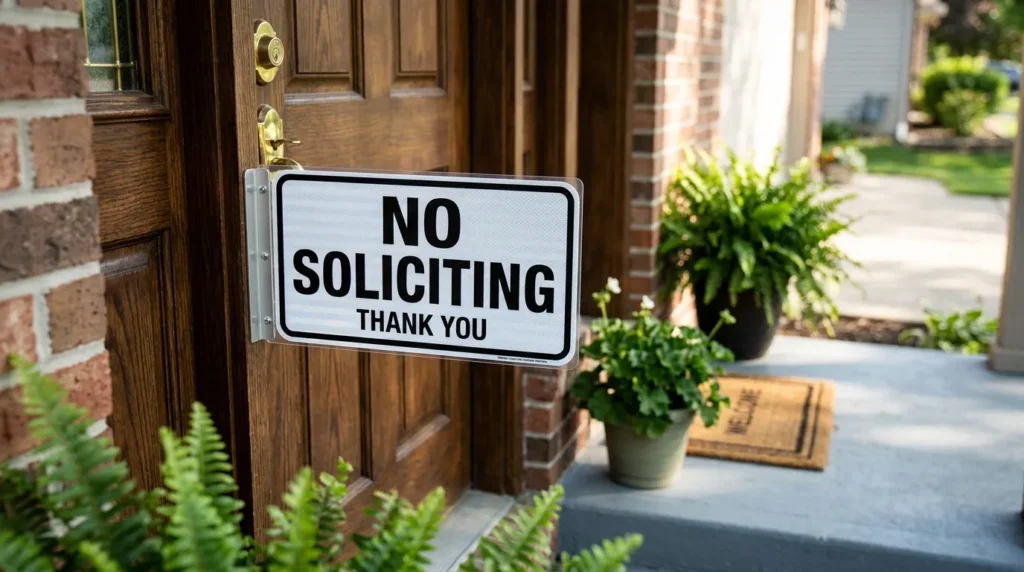
Here are some examples:
- A roofing company skips a home displaying a “No Soliciting” sign.
- A charity volunteer avoids knocking because the sign requests no fundraising.
- A homeowner works remotely without constant sales interruptions.
- A neighborhood posts signs at entrances to discourage door-to-door marketing.
- A business requires all vendors to schedule appointments instead of walking in.
These examples show how the sign helps reduce unwanted interruptions.
❓Frequently Asked Questions
Does “No Soliciting” include religious groups?
Sometimes. Local laws may provide different protections depending on the activity.
Does it apply to political campaigns?
In some places yes, while in others political canvassing has different legal protections.
Can delivery drivers ignore the sign?
Yes. Delivering mail or packages is generally not considered solicitation.
Should businesses respect these signs?
Absolutely. Respecting homeowner preferences builds trust and professionalism.
Final Thoughts
A “No Soliciting” sign is a simple request asking visitors not to knock on the door for sales, promotions, fundraising, or other unsolicited business. While the exact legal effect varies depending on local laws, respecting these signs is both courteous and professional.
Whether you’re a homeowner looking for privacy or a salesperson wanting to understand the rules, knowing what “No Soliciting” means helps avoid misunderstandings. The next time you see one of these signs, you’ll know exactly what it is asking and why it matters.

Emily Dickinson is a creative and thoughtful writer at snamez.com, crafting unique names, nicknames, and inspiring ideas for readers.