

Ever stumbled across the word what does covenant mean and thought, Wait… is this a legal term, a church thing, or the name of a secret club?
Don’t worry you’re definitely not the only one! This little word shows up in everything from the Bible to business contracts, leaving many people scratching their heads.
The good news? Understanding it is much easier than it sounds.
In this guide, we’ll break down what does covenant mean in plain English, share real-life examples, and make sure you never feel confused by this fancy-sounding word again.
Grab a coffee, and let’s decode covenant together!
📖 What Does Covenant Mean?

A covenant is a formal, binding agreement or promise between two or more parties. Unlike a casual promise, a covenant often carries significant responsibilities and expectations.
Simple Definition
Covenant Meaning: A serious agreement, pledge, or commitment that requires the involved parties to fulfill certain obligations.
Example
If two people agree to support each other under specific conditions and make a formal commitment, that agreement may be considered a covenant.
The word is commonly used in:
- Religion
- Law
- Real estate
- Finance
- Business agreements
🏛️ Origin of the Word Covenant
Understanding the history of the word helps clarify its importance.
The term covenant comes from the Latin word convenire, which means “to come together” or “agree.”
Over time, the word evolved into Middle English and eventually became associated with solemn promises and legally binding agreements.
Historically, covenants were considered stronger than ordinary promises because they involved trust, responsibility, and long-term commitment.
✝️ Covenant Meaning in the Bible
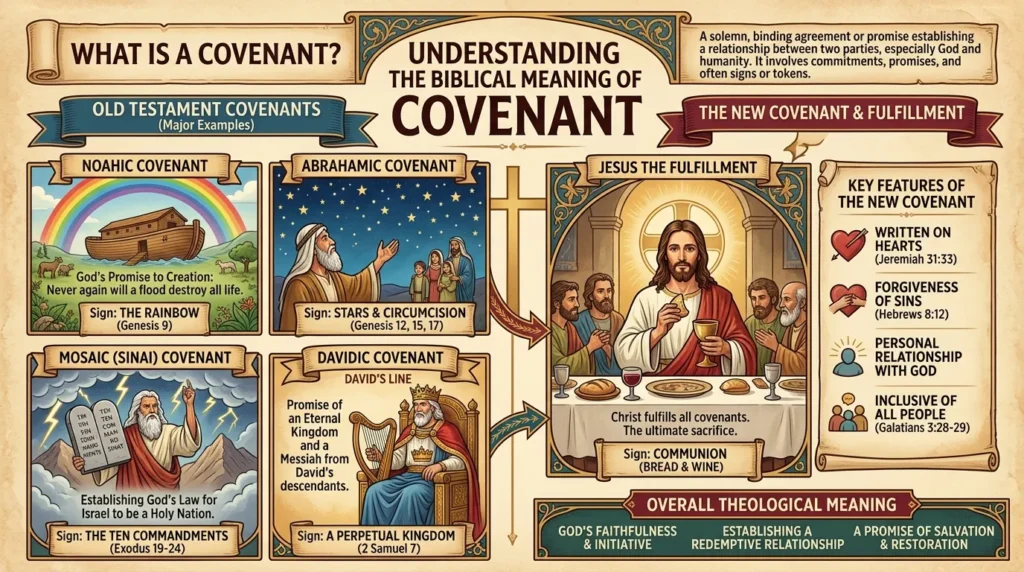
One of the most common reasons people search for what does covenant mean is because they encounter it in the Bible.
In biblical terms, a covenant refers to a sacred agreement between God and people.
Key Biblical Covenants
The Noahic Covenant
After the flood, God promised Noah that He would never destroy the earth again with a flood.
The rainbow became the sign of this covenant.
The Abrahamic Covenant
God promised Abraham:
- Many descendants
- Land
- Blessings for future generations
The Mosaic Covenant
God gave Moses the Law and the Ten Commandments for the Israelites to follow.
The New Covenant
In Christianity, the New Covenant refers to the relationship established through Jesus Christ, offering forgiveness and salvation.
⚖️ Covenant Meaning in Law
In legal settings, a covenant is a formal promise included within a contract or legal document.
A legal covenant requires a party to either:
- Do something
- Refrain from doing something
Examples
- A tenant agrees not to damage rented property.
- A business promises to maintain specific standards.
- A borrower agrees to meet financial conditions.
If a covenant is broken, legal consequences may follow.
🏠 Covenant Meaning in Real Estate

Real estate covenants are common in property ownership.
A property covenant is a rule or restriction attached to land or property.
Examples
Property owners may be required to:
- Maintain their lawn
- Follow architectural guidelines
- Avoid certain business activities
- Respect neighborhood regulations
These covenants help preserve community standards and property values.
💼 Covenant Meaning in Business
Businesses often use covenants in contracts and agreements.
These covenants outline obligations and restrictions that parties must follow.
Business Covenant Examples
- Non-compete agreements
- Confidentiality agreements
- Partnership obligations
- Service commitments
Business covenants help ensure fairness and accountability.
💰 Covenant Meaning in Finance
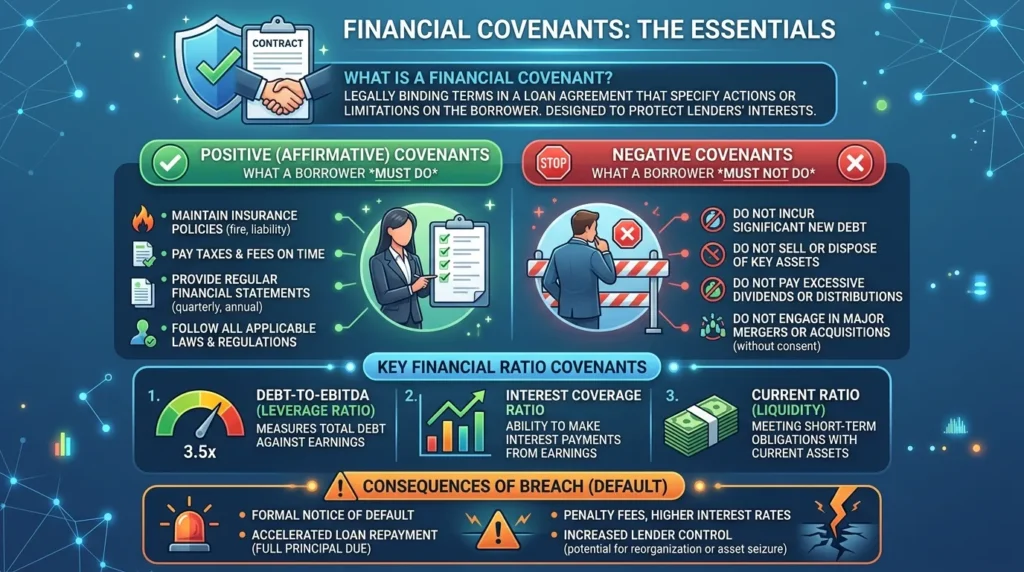
In finance, covenants are conditions attached to loans or bonds.
Lenders use covenants to protect their investments.
Common Financial Covenants
Positive Covenants
Actions a borrower must take.
Examples:
- Maintain insurance
- Submit financial reports
- Pay taxes on time
Negative Covenants
Actions a borrower must avoid.
Examples:
- Taking excessive debt
- Selling important assets
- Making risky investments
Failure to comply may result in penalties or loan default.
🔍 Types of Covenants
Not all covenants are the same. Understanding the main categories helps clarify their use.
Affirmative Covenants
Require a person or organization to perform specific actions.
Examples:
- Maintaining property
- Filing reports
- Paying fees
Negative Covenants
Restrict certain activities.
Examples:
- Not operating a business in a residential area
- Not competing against a former employer
Express Covenants
Clearly written and stated in a document.
Implied Covenants
Not explicitly written but legally assumed based on circumstances.
🤝 Covenant vs Contract: What’s the Difference?
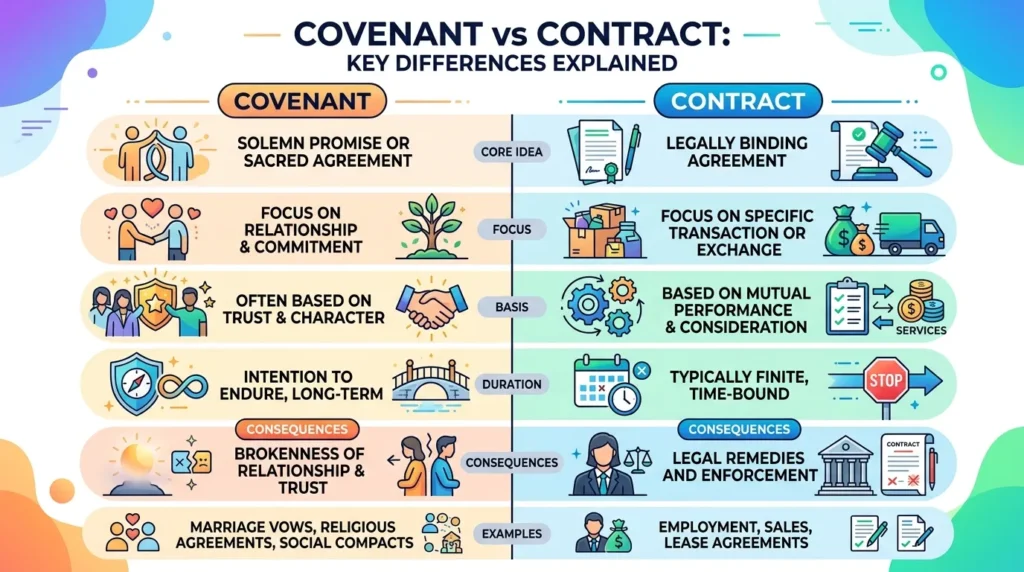
Many people confuse covenants with contracts.
Similarities
Both involve:
- Agreements
- Obligations
- Legal responsibilities
Differences
| Covenant | Contract |
|---|---|
| Often emphasizes commitment and promise | Focuses on exchange of obligations |
| Common in religion and property law | Common in business and commerce |
| May involve long-term duties | Can be short-term or long-term |
A covenant can be part of a contract, but not every contract contains a covenant.
🌍 Real-Life Examples of Covenants
To better understand the meaning, consider these practical examples.
Neighborhood Rules
A homeowners association requires residents to maintain their property appearance.
Employment Agreement
An employee agrees not to share company secrets.
Mortgage Loan
A borrower promises to maintain insurance coverage.
Religious Commitment
A believer follows a sacred promise or spiritual agreement.
Each example involves responsibilities that must be honored.
📚 Why Are Covenants Important?

Covenants play a crucial role in maintaining trust and accountability.
Benefits of Covenants
- Promote responsibility
- Establish expectations
- Protect rights
- Reduce disputes
- Encourage long-term commitment
Without covenants, many agreements would lack structure and enforcement.
❌ What Happens If a Covenant Is Broken?
Breaking a covenant can have serious consequences.
Legal Consequences
Depending on the situation:
- Financial penalties
- Lawsuits
- Contract termination
- Property disputes
Religious Consequences
In religious contexts, breaking a covenant may be viewed as failing to honor a sacred commitment.
Financial Consequences
Violating loan covenants may result in:
- Higher interest rates
- Loan repayment demands
- Credit damage
The exact outcome depends on the type of covenant involved.
🎯 Common Misconceptions About Covenants
Many people misunderstand the concept of a covenant.
Myth 1: Covenants Are Only Religious
False.
Covenants are also common in law, finance, real estate, and business.
Myth 2: Covenants Are Just Promises
Not exactly.
They are typically more formal and often legally enforceable.
Myth 3: Covenants Cannot Be Changed
Some covenants can be modified if all parties agree or legal requirements are met.
📝 How to Identify a Covenant in a Document
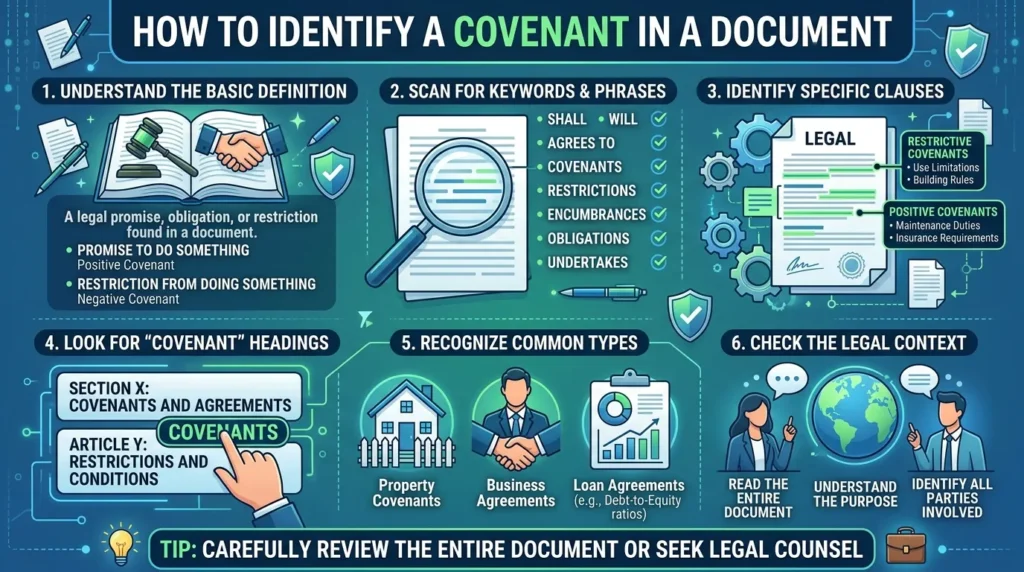
When reading contracts or agreements, look for phrases such as:
- “The party agrees to…”
- “The borrower shall…”
- “The owner must…”
- “The tenant shall not…”
These statements often indicate covenant obligations.
Reading carefully helps avoid misunderstandings and future disputes.
Frequently Asked Questions
What does covenant mean in simple words?
A covenant is a serious promise or formal agreement between two or more parties.
Is a covenant legally binding?
Many covenants are legally enforceable, especially those found in contracts, property agreements, and loan documents.
What is a covenant in the Bible?
A covenant in the Bible is a sacred agreement between God and people.
What is a covenant in real estate?
It is a rule or restriction attached to property ownership.
What is a financial covenant?
A condition that borrowers must follow when receiving a loan or issuing bonds.
Can a covenant be broken?
Yes, but doing so may lead to legal, financial, or other consequences.
Conclusion
If you’ve been wondering what does covenant mean, the answer is straightforward: a covenant is a serious, often binding agreement or promise between parties.
While the exact meaning changes slightly depending on the context, the central idea remains one of commitment, responsibility, and trust.
Covenants are important in religion, law, real estate, business, and finance because they help establish clear expectations and protect the interests of everyone involved.
Whether you’re reading the Bible, reviewing a contract, purchasing property, or managing a business agreement, understanding covenants can help you make informed decisions and avoid potential issues.
The next time you encounter the word covenant, you’ll know that it represents much more than a simple promise it’s a meaningful commitment designed to create accountability and trust between parties.

John Keats is a poetic and creative writer at snamez.com, crafting unique names, nicknames, and inspiring ideas for readers.