
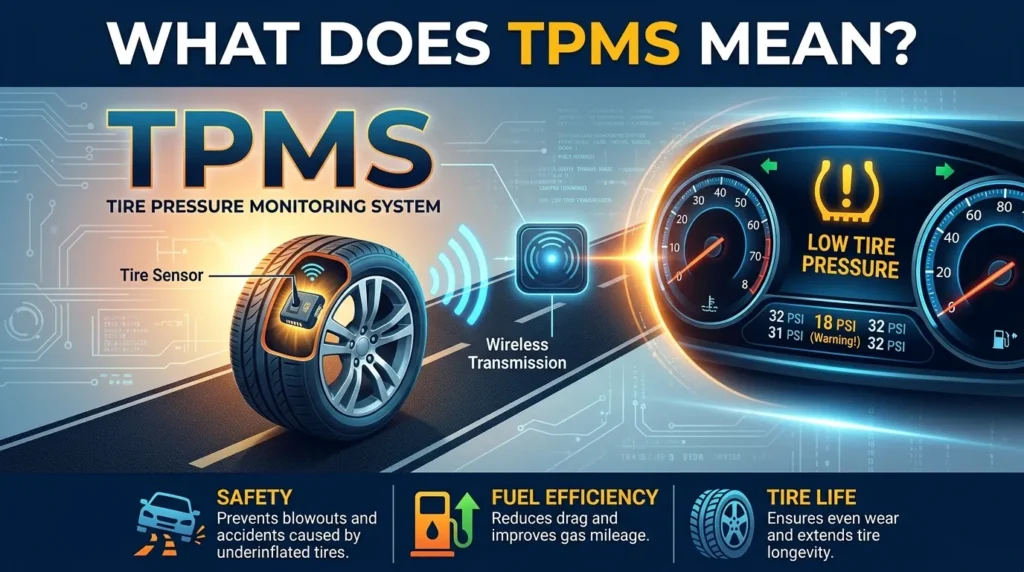
Modern cars are full of advanced safety systems, and TPMS is one of the most important but many drivers don’t even know what it actually means.
When a small warning light appears on the dashboard, people suddenly start searching what does TPMS mean to understand if their car has a problem or not.
TPMS stands for Tire Pressure Monitoring System, a technology designed to monitor the air pressure inside your car tires in real time.
It helps prevent accidents, improves fuel efficiency, and keeps your driving safe and smooth.
In this guide, you will learn everything about TPMS in simple English its meaning, how it works, types, benefits, warning signs, and common issues.
By the end, you will fully understand why this system is important and how it protects your vehicle every day.
What is TPMS? 🚘
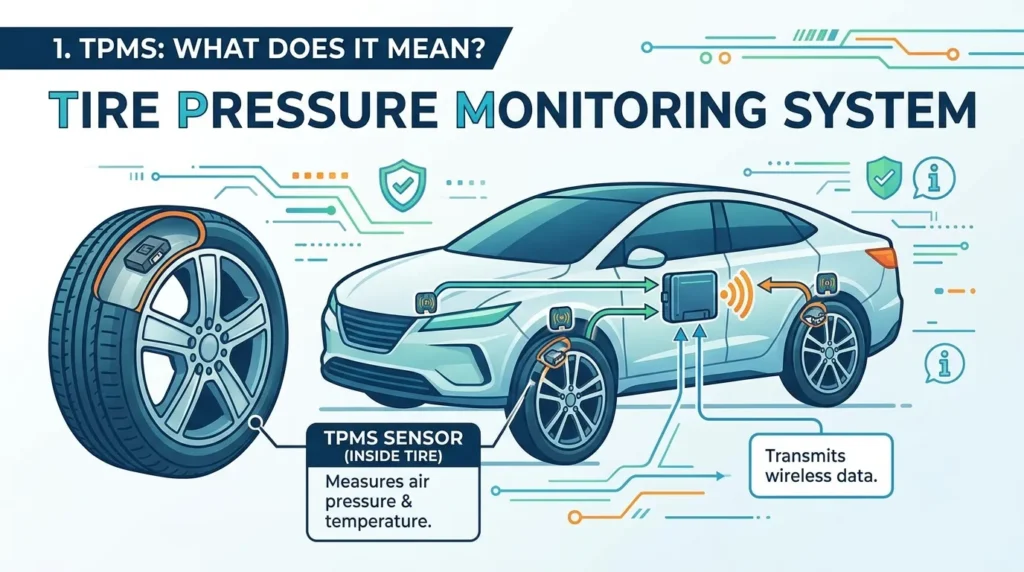
TPMS (Tire Pressure Monitoring System) is an electronic safety system used in modern vehicles to monitor tire air pressure. Its main job is to alert the driver when one or more tires are under-inflated or over-inflated.
This system ensures that your tires always stay at the correct pressure level recommended by the manufacturer. Proper tire pressure improves driving safety, reduces tire wear, and increases fuel efficiency.
TPMS has become a standard feature in many cars worldwide because tire-related accidents are more common than most people think.
Full Form of TPMS 📘
The full form of TPMS is Tire Pressure Monitoring System.
Each word has a clear meaning:
- Tire → The rubber wheels of a vehicle
- Pressure → Amount of air inside the tire
- Monitoring → Constant checking or tracking
- System → A set of electronic components working together
So, TPMS is basically a system that continuously checks tire air pressure and warns the driver if something is wrong.
How TPMS Works ⚙️
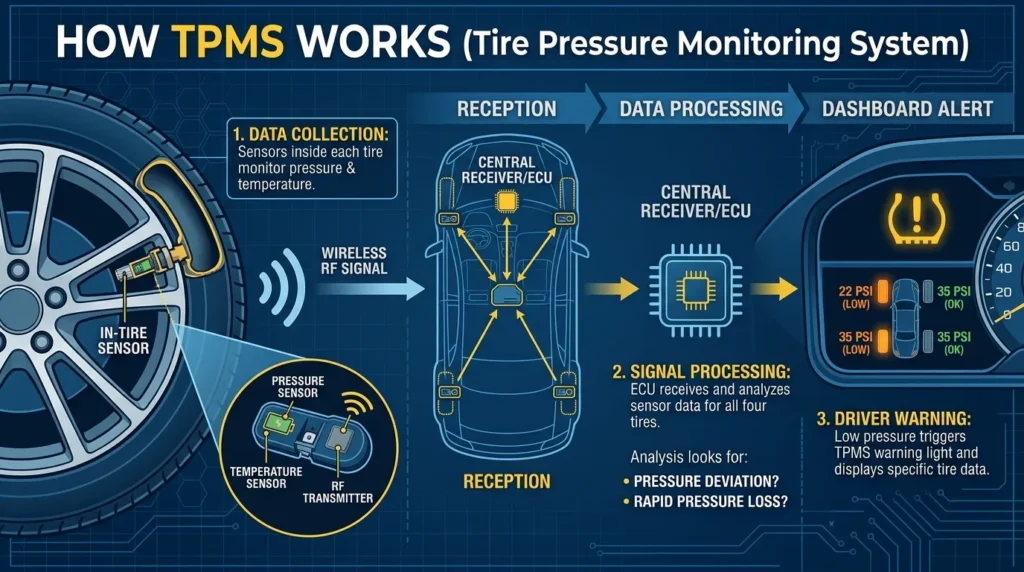
TPMS works using small sensors installed either inside the tire or in the wheel assembly. These sensors measure air pressure and sometimes temperature.
Here’s how it works step-by-step:
- Sensors continuously monitor tire pressure
- Data is sent to the car’s computer system
- If pressure drops below safe level, system triggers a warning
- A yellow TPMS light appears on dashboard
This process happens in real time, meaning the driver gets instant alerts if a tire becomes unsafe.
Types of TPMS Systems 🔧
There are two main types of TPMS used in vehicles. Each system works differently but serves the same purpose keeping your tires safe.
1. Direct TPMS
Direct TPMS uses physical sensors inside each tire. These sensors directly measure air pressure and send accurate data to the car system.
2. Indirect TPMS
Indirect TPMS does not use physical pressure sensors. Instead, it uses ABS wheel speed sensors to detect changes in tire rotation that indicate low pressure.
Both systems are effective, but direct TPMS is more accurate.
Why TPMS is Important for Safety 🛑
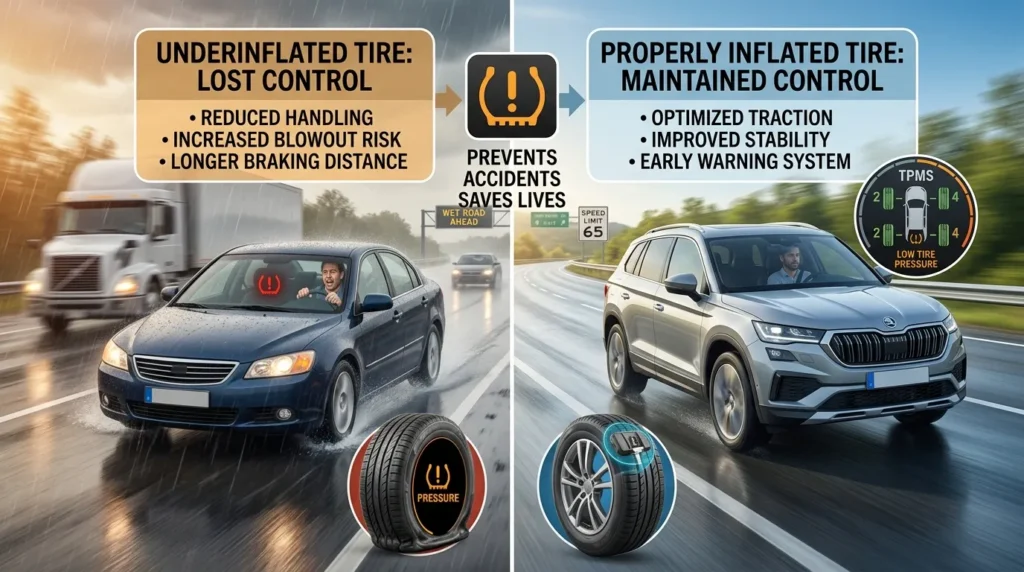
TPMS plays a very important role in road safety. Driving with low tire pressure can cause serious problems.
Here’s why it matters:
- Prevents tire blowouts at high speed
- Improves vehicle control and braking
- Reduces accident risk
- Helps maintain stable driving performance
Many accidents happen due to under-inflated tires, and TPMS helps prevent this silently in the background.
TPMS Warning Light Meaning 💡
When the TPMS light appears on your dashboard, it usually looks like a horseshoe-shaped symbol with an exclamation mark.
It means:
- Tire pressure is low
- One or more tires may be damaged
- System needs inspection or reset
If the light blinks or stays on, you should check your tires immediately. Ignoring it can lead to unsafe driving conditions.
Common Causes of TPMS Warning 🚨
There are several reasons why your TPMS light may turn on:
- Low tire pressure due to air leakage
- Sudden temperature changes (cold weather)
- Punctured tire
- Faulty TPMS sensor
- Battery issue in sensor
Sometimes, the warning appears even if nothing is seriously wrong, especially during weather changes.
Benefits of TPMS 🌟
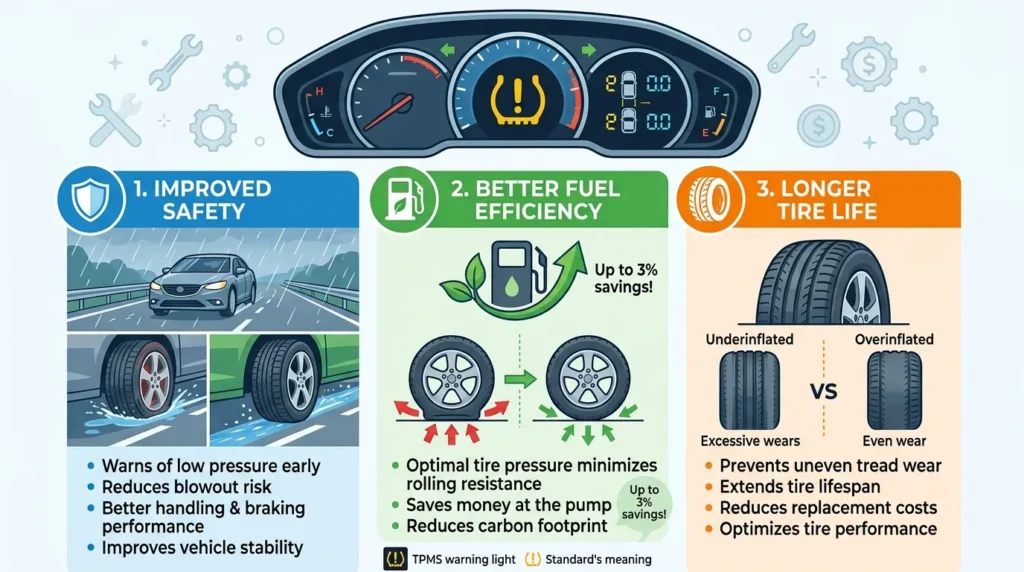
TPMS offers many advantages for drivers and vehicles:
- Improves road safety
- Increases tire lifespan
- Enhances fuel efficiency
- Reduces maintenance cost
- Provides real-time monitoring
With correct tire pressure, your car performs better and consumes less fuel.
TPMS Reset Process 🔄
After inflating tires or fixing a problem, you may need to reset the TPMS system.
Common reset steps:
- Inflate all tires to correct pressure
- Turn ignition ON
- Press TPMS reset button (if available)
- Drive for a few minutes to recalibrate system
Some modern cars reset automatically after driving.
TPMS Maintenance Tips 🧰
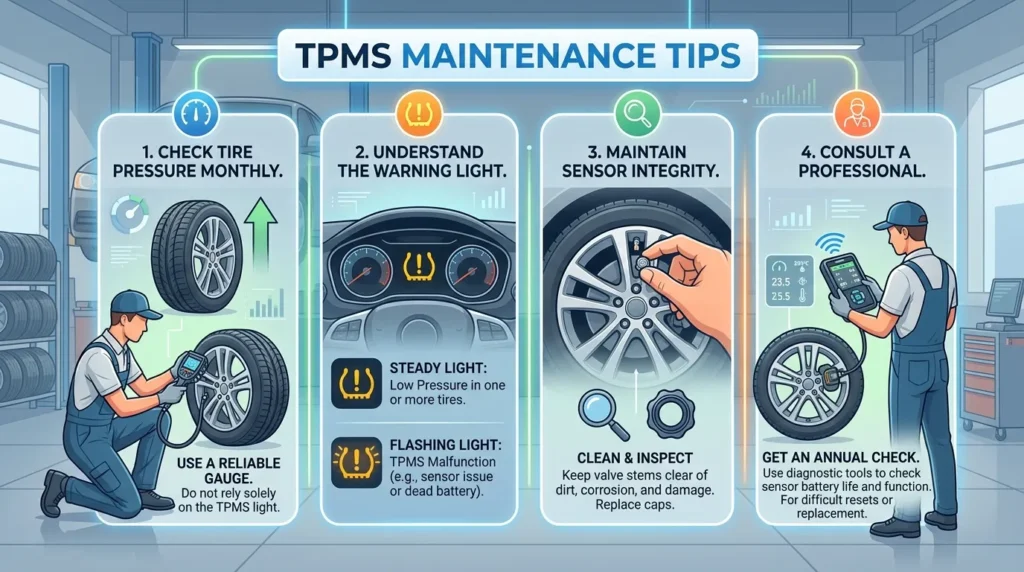
To keep your TPMS working properly:
- Check tire pressure regularly
- Replace sensors every 5–7 years
- Avoid rough driving that damages sensors
- Keep tires properly inflated
- Visit mechanic if warning light stays on
Proper maintenance ensures long-term accuracy and safety.
TPMS Problems & Issues ⚠️
Like any electronic system, TPMS can also face problems:
- Sensor battery failure
- Incorrect readings
- Signal loss between sensor and system
- Faulty dashboard warning light
If TPMS stops working properly, it should be diagnosed by a professional mechanic.
Cost of TPMS Sensors 💰
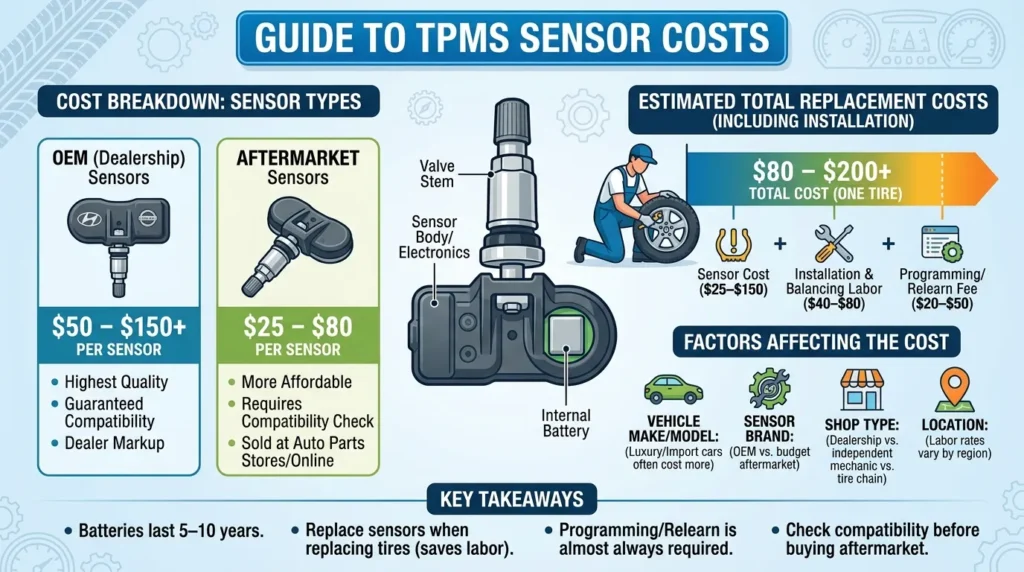
The cost of TPMS depends on car type and sensor quality.
- Basic sensors: affordable range
- Premium car sensors: higher cost
- Installation charges may apply
On average, replacing a single TPMS sensor is more expensive than a normal tire valve, but it is worth it for safety.
Frequently Asked Questions (FAQs) ❓
1. What does TPMS mean in a car?
TPMS means Tire Pressure Monitoring System, which checks tire air pressure.
2. Is TPMS important?
Yes, it is very important for safety and fuel efficiency.
3. Can I drive with TPMS light on?
You can, but it is not recommended. Check tires immediately.
4. Does TPMS replace manual tire checking?
No, you should still check tire pressure manually sometimes.
5. How long does TPMS last?
Usually 5–10 years depending on usage and sensor quality.
Final Thoughts 🏁
TPMS is a smart safety feature that helps drivers stay safe on the road without constantly checking tire pressure manually. It improves performance, saves fuel, and prevents dangerous tire-related accidents.
Understanding “what does TPMS mean” is important for every car owner because it directly affects driving safety.
If your TPMS light ever turns on, don’t ignore it check your tires as soon as possible.

John Keats is a poetic and creative writer at snamez.com, crafting unique names, nicknames, and inspiring ideas for readers.